Request for Proposal

From negotiation to booking, Accomy’s one system gives you total control.
Online Booking Tool

Book, manage, and control company travel with real-time visibility, built-in compliance & global support.
Hotel Content

Integrated with GDS, wholesalers, and hotels chains, purpose-built for TMCs and OTAs.
Flight Content

Global air supply, API-ready and designed for scale and reliability.
| December 10, 2025
Booking hotels in Malaysia in 2026 can be confusing with fluctuating prices, varying availability, and multiple apps to choose from. In this guide, you’ll learn:
Which hotel booking apps suit different traveller types
— from flexible leisure travellers to corporate teams.
How to compare rates across platforms to get the best deals.
Tips to save money and avoid last-minute booking stress.
How corporate travellers and SMEs can unlock better rates using platforms like Accomy, with centralised bookings, approval workflows, and consolidated invoices.
By the end of this article, you’ll know how to book smarter, save time, and get predictable travel costs, whether you’re travelling for work or leisure.

You’ve seen it: check a price in the morning, and by lunch it’s RM40 higher. Open two apps, and both show different rates. Or worse, you book a room and get a call later: “Sorry, we’re actually full.”
Here’s why:
Dynamic pricing: Rates update constantly based on occupancy, demand, events, or even the platform you’re browsing from.
Inconsistent availability: Each app may show different room stock because hotels control how many rooms are released to each channel.
Fragmented experience: Prices, promotions, and inventory vary across platforms, creating confusion for travellers.
It’s not your imagination — hotel booking has simply become more complex.
 Exterior view of Four Seasons Malaysia, featuring its signature luxury design
If you travel frequently around Malaysia — KL, Penang, JB, KK — you’ll notice a pattern. Prices have become more unpredictable, and booking windows are shorter. Hotels fill up faster. Apps seem more aggressive with promotions.
Malaysia has experienced:
A surge in both domestic and regional travellers
More hotels adopting automated revenue tools
A rise in last-minute bookings (especially among business travellers)
Higher sensitivity to public holidays, school breaks, and events
The result? The hotel market is constantly shifting — and if you don’t know where to look or when to book, it’s easy to overpay without realizing it.
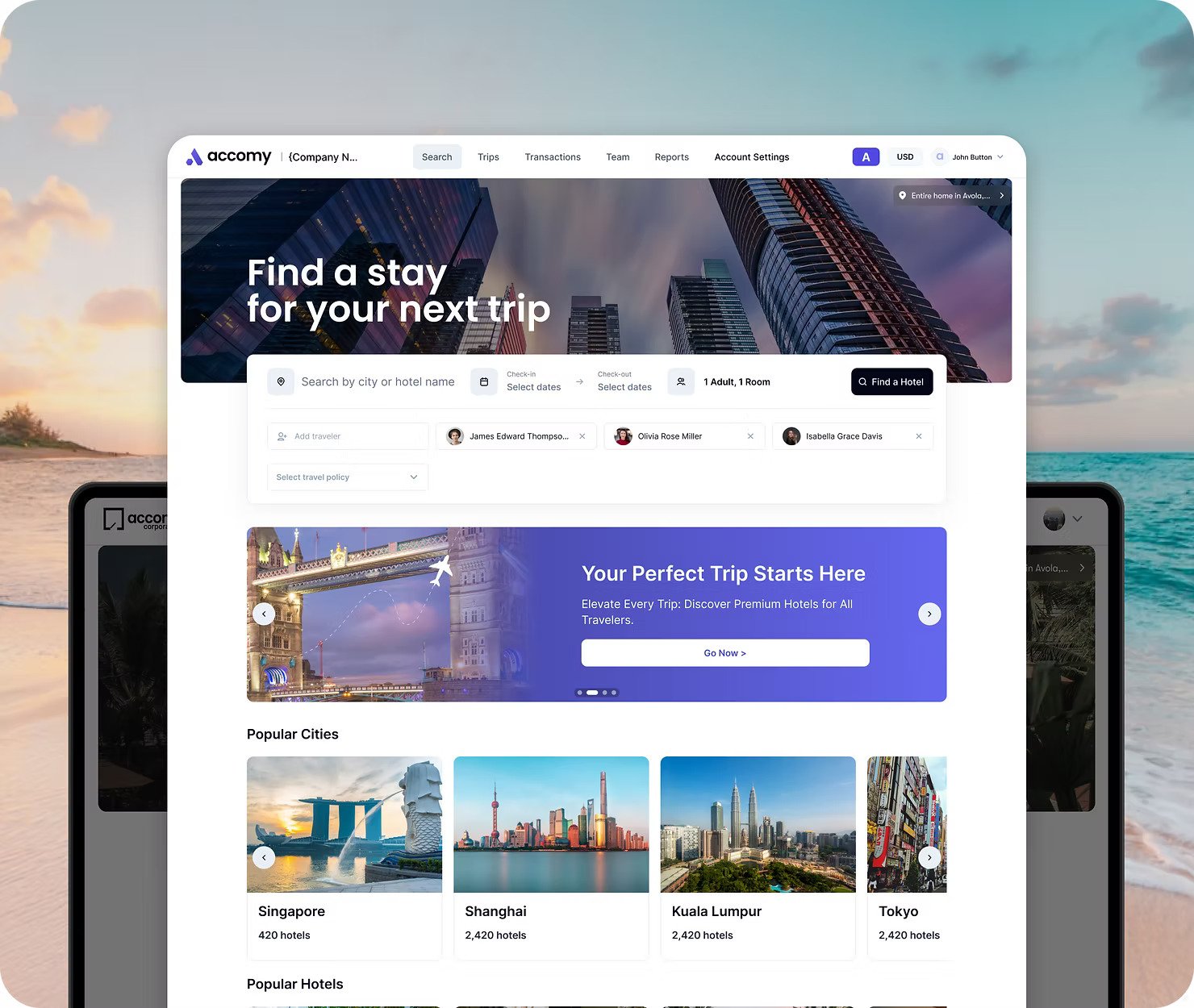 A mockup of Accomy’s intuitive hotel booking platform, designed to streamline corporate and personal travel planning.
When it comes to booking hotels in Malaysia, you’ve probably caught yourself in a familiar cycle:
You open Agoda “just to check” the latest rates. Then you switch to Booking.com to compare. Maybe you peek at Traveloka for a promo, or Trip.com for regional deals. And if you’re booking for work, your company might even push you to use Accomy.
Here’s a breakdown of each platform and what it’s best for:
Booking.com is ideal for travellers who value flexibility. With a massive inventory and reliable reviews, it allows free cancellations on many properties, making it easy to adapt travel plans at the last minute.
Pros: Booking.com is excellent for leisure travellers who prioritize freedom and flexibility. It offers detailed property descriptions, user reviews, and frequent updates to inventory.
Cons: Prices may be slightly higher than apps offering aggressive promotions, and corporate features such as invoice consolidation are limited.
When to Use It
Perfect for solo travellers, families, or groups planning trips with variable schedules who want reliable booking options and flexible cancellation policies.
Corporate Travel Angle
Booking.com can handle ad-hoc work trips, but companies may still face fragmented bookings and inconsistent invoices. Platforms like Accomy address these gaps with centralised booking workflows and corporate rates.
Agoda offers one of the broadest selections of hotels in Malaysia, with frequent promotions and a user-friendly interface for booking both leisure and business stays.
Pros: Its intuitive interface and promotional deals make it a favourite for travellers hunting for bargains.
Cons: Some rooms have non-refundable rates, and inventory may differ from other apps due to how hotels distribute stock.
When to Use It
Ideal for travellers who want a wide range of options and regular discounts, especially for leisure stays.
Corporate Travel Angle
Agoda can work for small teams, but approval workflows and consolidated billing are not standard — corporate platforms like Accomy streamline these processes.
Traveloka is mobile-friendly and excels in offering regional promotions, making it suitable for travellers crossing Malaysia and nearby countries.
Pros:Frequent deals and a smooth mobile experience make Traveloka a convenient choice for quick bookings.
Cons:Limited corporate features and occasionally lower-tier room listings can restrict business use.
When to Use It
Ideal for regional travellers seeking good deals and convenience.
Corporate Travel Angle
Traveloka is useful for smaller, occasional bookings, but centralised corporate tracking and approvals are missing — a gap Accomy fills efficiently.
Trip.com offers competitive pricing for international travellers and promotions for East Malaysia, making it a solid choice for cross-border or regional trips.
Pros: Strong deals for international visitors and East Malaysia promotions.
Cons: Smaller inventory in smaller towns and limited corporate-friendly features.
When to Use It
Ideal for international travellers or those visiting East Malaysia, especially for leisure.
Corporate Travel Angle
While Trip.com can support occasional business travel, companies managing multiple bookings need a platform like Accomy for accurate inventory and invoice consolidation.
Accomy is specifically designed for corporate travellers, teams, and SMEs. It provides real-time hotel availability, corporate rates, approval workflows, and consolidated invoicing.
Pros:Streamlined processes for team bookings, live rates, easy approvals, and single monthly invoices.
Cons:Requires account setup; primarily focused on business travellers.
When to Use It
Ideal for SMEs, startups, and any company with recurring travel needs — perfect for corporate and business trips.
Corporate Travel Angle
Accomy centralises bookings, reduces admin hassle, ensures correct corporate rates, and removes the headache of juggling multiple apps.
By understanding what each app does best, and knowing how hotels manage their inventory, you can book smarter and save both time and money — without bouncing between four different screens.
Let’s break this down in simple terms.
Every hotel controls:
The problem happens when these systems don’t sync in real time — which happens a lot more often than you’d expect. So yes, you can see “Fully booked” on one app and “2 rooms left” on another.
When a hotel manages its inventory well:
When it doesn’t… well, you’ve experienced it.
If you're booking as part of your job — or you’re running a company where your team travels — the pain is multiplied:
Everyone books on different apps
Finance teams have to chase receipts
Managers approve bookings through long message chains
Employees usually pick whatever looks fastest, not necessarily what’s cheapest
Monthly travel costs become unpredictable
You’ve probably felt this fragmentation yourself: “Why do my team’s bookings look so unmanageable?”
This is exactly where corporate booking platforms such as Accomy change everything. They centralise bookings, streamline approvals, and give you visibility over costs — all in one place.
When you hear “corporate rate,” you might think it’s only for big companies like Petronas or Grab. But that’s no longer the case. Hotels in Malaysia are increasingly open to giving SMEs, startups, and teams corporate rates because business travel has become more regular — especially in KL, Penang, JB and KK.
Hotels offer these rates because:
Business travellers travel during weekdays (their quiet periods)
Companies tend to book repeatedly
Cancellations are lower
They can predict demand better
If your team travels even a couple of times a month, you’re already in the zone where corporate rates can save you money.
You just need a platform that actually unlocks those savings — and that’s exactly what Accomy does for you!

If you’re a traveller, Accomy helps you book confidently because the hotel data you see is synchronised and accurate.
If you’re a company, Accomy becomes the place where:
Your team books in one platform
You get corporate rates automatically
Approvals are built in
Finance gets a single monthly invoice
You avoid “Eh, I lost my receipt again” moments
You're not juggling 4 different apps anymore. You’re not guessing which price is “real.” And you’re not overpaying simply because the process isn’t organised. You regain control.
Instead of scrolling endlessly, focus on what actually matters for you:
If you're travelling for leisure, prioritise:
Location convenience
Cleanliness ratings
Flexible cancellations
Breakfast options
Realistic photos
If you're travelling for work, you should look for:
High-speed Wi-Fi (not “OK lah” Wi-Fi)
Quiet work-friendly rooms
Easy check-in/out
Strong reviews from other business travellers
Hotels that issue proper invoices
A good platform will surface this information automatically so you don’t need to stress.
Here’s what actually works in Malaysia:
Book early for school holidays — prices surge more than you think.
Travel mid-week if you can — KL and Penang are cheapest then.
Don’t rely on a single app — price differences are real.
If you’re travelling for work, your company should absolutely use corporate rates like with Accomy.
Avoid last-minute bookings on Fridays; that’s when prices spike dramatically.
You deserve predictability when travelling. These small habits help you get it.
Whether you’re a freelancer moving between KL and Penang, a manager handling outstation trips, a small business watching travel costs, or simply someone who wants a stress-free booking experience — you now understand why hotel booking feels so complicated in 2025.
The system isn’t broken. It’s just faster, more dynamic, and less predictable than ever.
But once you understand how pricing, demand, and inventory actually work behind the scenes, you can make smarter booking decisions without second-guessing yourself.
And this is where Accomy fits in.Instead of comparing four different apps, chasing receipts, or dealing with inconsistent prices, you get:
Accurate, real-time hotel data
Centralised bookings
Corporate rates when you need them
One platform for your team or your own travel
With the right insight and the right tool, booking a hotel in 2025 becomes simple again — not stressful.
The best hotel booking apps in Malaysia in 2025 are Accomy, Agoda, Booking.com, Traveloka, and Trip.com. Each offers strong local inventory, competitive pricing, and frequent promotions. If you’re booking for work or managing multiple travellers, a corporate platform like Accomy is more reliable because it gives you accurate live inventory and corporate rates.
Hotel prices in Malaysia change frequently because of dynamic pricing — rates adjust based on occupancy, demand, seasonality, and events. Apps may show different prices because hotels release different room allotments to each platform. This is why prices shift even within the same day.
Book mid-week, compare rates across at least two apps, and avoid school holidays. KL prices tend to spike on weekends. For work trips, corporate rates through Accomy or long-stay discounts can save significantly more than regular promo prices.
Apps usually provide more promotions, while direct bookings offer personalised perks. The best approach is to compare both. For corporate travellers, direct vs app matters less — consistency and control matter more, which is why many companies choose corporate platforms that sync everything into one place such as Accomy.
Corporate hotel rates are discounted prices offered to businesses that book consistently. These rates include perks like flexible cancellations, fixed pricing, and priority availability. You can access them through a corporate booking tool like Accomy or by requesting them directly from hotels.
Yes. Corporate booking platforms like Accomy let you manage all employee bookings in one dashboard, automate approvals, track spending, and consolidate invoices. This removes the need for screenshots, manual claims, or checking multiple apps.
Different apps receive different room allocations from hotels. So one platform may run out of inventory while another still has rooms available. It’s caused by how hotels manage distribution channels — not by an error on your app.
Hotel inventory management is how hotels control their available rooms, rates, and distribution across booking channels. Good inventory management means more accurate prices, fewer overbookings, and more reliable availability for you.
Companies can reduce travel costs by using a booking tool with corporate rates, setting clear travel policies, consolidating bookings into one platform, and monitoring travel patterns. Tools like Accomy help automate this so your team doesn’t overspend or book across random apps.
The top business hubs in Malaysia in 2025 are Kuala Lumpur, Penang, Johor Bahru, and Kota Kinabalu. These cities offer strong hotel options, flexible rates, and better infrastructure for work travel.
The best time to book hotels in Malaysia is 2–4 weeks before your stay, avoiding school holidays and major event weeks. Weekdays generally offer lower prices than weekends, especially in KL and Penang.
OTAs (like Agoda or Booking.com) are built for individual travellers. Corporate booking tools (like Accomy) are built for teams — offering approval flows, invoicing, corporate rates, and travel tracking. If you handle company travel, an OTA alone won’t give you the control you need.
Yes. Many Malaysian hotels offer long-stay, weekly, and monthly corporate rates, especially in KL, Penang, and JB. These can save 10–40% compared to nightly rates.
Look for stable Wi-Fi, quiet rooms, late checkout, proximity to business district